


The software release life cycle (SRLC) is an essential process that guides software from the initial idea to its ongoing maintenance after launch. It offers a structured path that ensures every stage is carried out efficiently and with clear direction. For any software development company, following a well-defined release lifecycle is vital to managing software projects efficiently and ensuring the delivery of a high-quality software product that meets user needs.
The software release life cycle comprises key stages that guide a software product from concept to launch and beyond.
This blog will take you through the stages of the release cycle, explaining how each phase contributes to delivering a stable and efficient product. We will also explore the software release process, common challenges in software releases, and share best practices your team can follow to optimise workflows, minimise risks, and deliver better results with each release.
What is Software Release Lifecycle?
A software release life cycle (SRLC) or software release cycle is a subset of the software development lifecycle. It comprises the stages that cover the release and maintenance of software after it has been developed.
What are the Stages of SRLC?
The stages of a release cycle provide a structured roadmap; each stage has a specific goal that contributes to an effective software release. Developers and project managers can track progress and validate improvements in each iteration to keep pace with evolving trends.
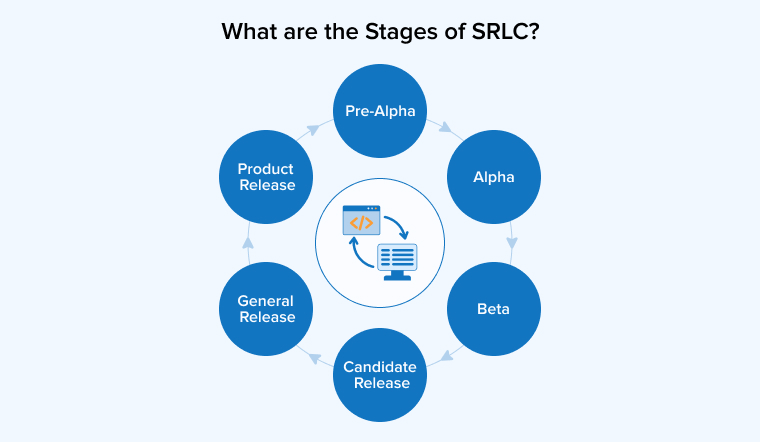
The following are the six stages of the software release cycle:
1. Pre-Alpha
The pre-alpha stage is the initial stage of software development, where early development activities take place before the alpha stage. This stage focuses on product development rather than release and marketing. In this stage, the project team defines the product and how they will build it. The pre-alpha stage includes every activity performed before formal testing:
- Requirement Analysis: The product manager and team discuss the problem definition, customer needs, strategies to address the problem, stakeholders, and existing solutions in the market. Feasibility reports and the SRS (Software Requirement Specification) document are prepared.
- Planning: The team plans how the software will be developed: goals, scope, features, tools, technologies, and timeline.
- Design: Creating a vision of the final product. This involves high-level design documents, prototypes, wireframes, and mockups.
- Development: The coding stage, where developers implement the specified requirements using the chosen technologies. Developers work in coordination with design and other teams.
- Unit Testing: Developers test individual units of code before handing them to QA for more extensive testing.
2. Alpha
The alpha phase is the first stage of software testing. At this point, the product looks like a final product with core functionalities, but it is not. It is an unstable version that contains malfunctions and bugs and is not ready for end users. Alpha testers are in-house employees and developers who perform alpha testing after system testing. It is a form of user acceptance testing carried out in a controlled environment using both black-box and white-box testing techniques. Core functionality, usability, and performance are assessed, and feedback is collected.
During the alpha stage, the product is under active development: new features may be added and existing ones refined based on the feedback. It ends when the product is considered feature-complete, and a feature freeze is implemented.
3. Beta
The Beta stage is the second phase of software testing. In this phase, the software undergoes more in-depth testing than in the alpha testing. The product is relatively stable but may still contain some bugs, so it is tested in a real-world environment by end-users.
There are two types of Beta testing:
- Open Beta: This testing invites all interested users to participate. Therefore, developers receive feedback from multiple testers about different areas, facilitating easy bug identification and resolution.
- Closed Beta: The testers are a selected group of users who address specific areas of concern to provide in-depth feedback and refine the user experience.
Beta testing helps uncover unseen or undetected bugs and refines the software as much as possible before the final release. It can generate significant interest and anticipation for a product before its official launch, help build a loyal customer base, and influence market reception at launch.
4. Candidate Release
The release candidate phase is a final improvement stage in which the software is rigorously tested one last time. It’s a pre-release version that can become the final stable release if no serious defects are discovered. There can be multiple release candidates before the final release, ensuring that remaining issues are addressed. All relevant documentation, release notes, marketing materials, user manuals, and support resources are prepared and updated.
5. General Release
The General Availability (GA) stage signifies the release of software to the general public by deploying it into the production environment. The goal is to make the software available to its intended users, hence marketing and sales efforts increase.
As software enters the GA stage, ongoing support and monitoring become essential to maintain quality and address user needs.
However, GA doesn’t mark the end of the release cycle. Development and support teams must continuously monitor performance, collect user feedback, and address bug reports.
6. Product Release
A production release occurs when a product is deployed to the live environment for end-users. It is known as a stable release and marks the end of the release cycle for a particular software version. Stable releases can be categorised into two types:
- Regular Stable Releases: These are typically easy to install on target systems and have a lower risk of causing issues in production. They are often called “major releases” in web applications.
- Long-Term Support (LTS) Releases: These are designed for extended maintenance and support, allowing users to remain on a stable version for a longer period, commonly around three years. There are no disruptions due to frequent updates and testing cycles.
Software Release Process
This process includes a set of activities involved in the release of a version of the software. The following are the steps in the process:
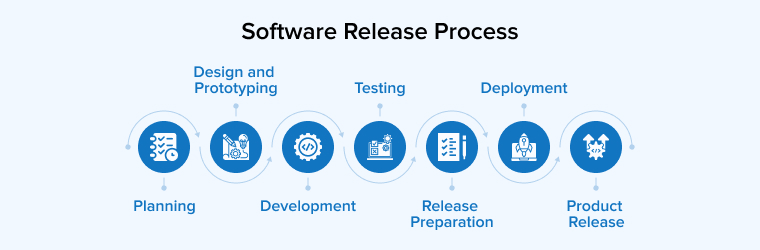
- Planning: The software team decides the product to be developed, its features and functionalities. A proper framework is laid down listing project goals, required resources, release schedules, risks, development methodology, and other essentials, keeping customer requirements and market demands at the centre stage of planning.
- Design and Prototyping: Software architects prepare the system design for the product. The blueprint explains the interactions between components. Prototypes and mockups are made for product visualisation.
- Development: The actual development of the software begins according to the chosen development approach, such as Agile or Incremental. Developers write and review code and integrate changes into the codebase.
- Testing: This is the software evaluation stage, where it undergoes rigorous testing like unit testing, integration testing, and system testing to meet the quality-control parameters. Bugs are detected and fixed, and detailed testing reports are prepared. Many teams now automate testing with specialised tools, which streamlines the release process and enables rapid updates based on user feedback.
- Release Preparation: The software is almost ready for deployment. The team makes last-minute changes, prepares release documents, writes user manuals, and guides. The deployment environment is assessed to ensure it matches the production environment.
- Deployment: Deployment makes the software available to users by installing it on target systems or publishing it to app stores or websites, ensuring easy access and proper configuration for end users.
- Product Release: The software is launched for end-users and supported by communications and marketing to inform them about the new software version, highlight features, and share important updates or improvements to increase user engagement.
Challenges in Software Release
The software release often brings challenges that teams must tackle to deliver a quality product. These issues can occur at different stages, so identifying and preparing for them early helps ensure smoother releases and better outcomes.
The most common challenges encountered during software release include:
- Deployment and Configuration: Deploying software can encounter sudden hurdles such as configuration errors, hardware mismatches, varied network setups, or different operating systems. If these issues are not resolved quickly, the deployment schedule may be disrupted, delaying the project and impacting deadlines.
- Integration Complexity: Integrating new software with existing systems can be difficult. Problems like mismatched data formats, API limitations, security checks, and scheduling constraints may arise. Careful planning, testing, and coordination between teams are essential to overcome these obstacles.
- Scope Management: Controlling project scope is difficult when requirements change or priorities conflict. Extra features added mid-development consume more time and resources. Striking the right balance between customer expectations, business goals, and available resources is crucial to keep the release achievable and on track.
- User Adoption: Encouraging users to accept new software can be challenging. People may resist change, need extra training, or worry about compatibility with current workflows and systems. Clear communication, adequate training, and addressing user concerns improve adoption.
- Security Concerns: Protecting software and user data is a top priority. Developers must identify and remediate vulnerabilities before launch, but predicting every threat is difficult. A strong security strategy, thorough testing (including code, dependency, and penetration testing), and ongoing monitoring help minimize risks and protect the system and its users.
Software Release Best Practices to Follow
There is a set of standard best practices that organizations follow during the software release cycle. We’ve listed the five most common and essential best practices:
1. Establish Clear Goals and Objectives
Set clear, realistic goals and KPIs for each release stage, ensuring they align with company objectives. These guide the team’s efforts, track progress, and help meet stakeholder expectations within planned timelines and available resources.
2. Use a Version Control System
Use a version control system like Git or SVN to track code changes, maintain history, and resolve conflicts. Version control improves organization, reduces errors, speeds up development, and provides a reliable source of truth throughout the software release process.
3. Select a Suitable Framework
Choose a management framework that fits your team to streamline and accelerate releases. Adopting approaches like sprint-based workflows can improve efficiency, enable more frequent updates, and help deliver value to the organization faster.
4. Restrict Post-production Changes
Avoid making untested or unreviewed changes directly in production, since they can cause serious issues and disrupt business operations. Ensure updates are properly tested and approved before deployment to maintain stability and reliability.
5. Keep a Track of the User Adoption Rate
Monitor how users adopt new features after a release and gather feedback on their expectations and experiences. Tracking adoption helps assess success and provides insights to shape improvements and plan future updates effectively.
6. Thorough Testing
Conduct thorough testing, including unit, integration, and user acceptance tests, at every stage to detect issues early. Multiple teams (QA, product managers, designers) should evaluate the software to identify bugs and verify acceptance criteria before broader deployment. Thorough testing ensures stable releases, improves product quality, and prevents user frustration caused by unexpected errors or performance problems.
Final Thoughts
Following a proper release cycle ensures timely product delivery without compromising quality. Resolve issues at each stage of the release cycle before moving forward; carrying them over can lead to major failures and waste time and resources.
With the growth of upcoming technologies, a solid understanding of the SRLC helps teams stay competitive and up to date with future trends.

Itesh Sharma is core member of Sales Department at TatvaSoft. He has got more than 6 years of experience in handling the task related to Customer Management and Project Management. Apart from his profession he also has keen interest in sharing the insight on different methodologies of software development.



Comments
Leave a message...