

Angular is widely regarded as one of the most important contributions to web development. Its open-source nature and an active community that continually improves the framework make it popular. Maintained and developed by Google, it is a top choice for many developers building mobile or desktop web applications. Besides, this TypeScript-based front-end development framework comes with some unique features that top Angular development companies prefer to use. In this blog, we are going to learn everything about these Angular features.
Read what experienced developers supporting Google frameworks have to say on this:
Angular grew with more than 40% on npm over the past year!
— Minko Gechev (@mgechev) March 3, 2021
This does not include thousands of companies using Angular from private registries or vendoring the packages, but it's still impressive to see even only serving as a baseline ❣️
Angular Generic Features
Some of the generic features of Angular are –
Cross-Platform
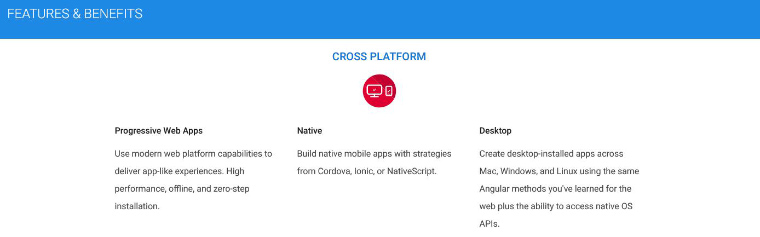
Angular is one of the most popular platforms for creating mobile web apps and cross-platform (including desktop) applications. It enables developers to create progressive web applications (PWA) with unique and robust functionalities. PWA offers an application-like experience to users by using modern web capabilities. Depending on requirements, one can deploy the application as a native app and/or progressive. The hybrid mobile SDK that helps package web apps for native app stores is iconic; it can be used to publish apps to app stores and also to deploy them as PWAs on the web. Besides, Angular also allows developers to develop desktop applications (for example, when used with frameworks like Electron).
Angular is powerful cross-platform feature allows developers to build progressive web applications and native mobile applications.#Angular #TypeScript #100DaysOfCode #CodeNewbie #WomenWhoCode pic.twitter.com/H4hKVAEYTW
— GrayHat Mwenda #IndustryExpertsTalk (@HarunMbaabu) August 1, 2020
High Speed & High Performance
Angular is a framework that has redefined modern JavaScript application development by compiling templates into executable code. This allows developers to combine their hand-written logic with the framework’s productive features. Besides, with Angular, developers can easily render components into HTML and CSS. This lets them preview the app’s UI when integrating with back-end platforms such as PHP, .NET, NodeJS, and others.
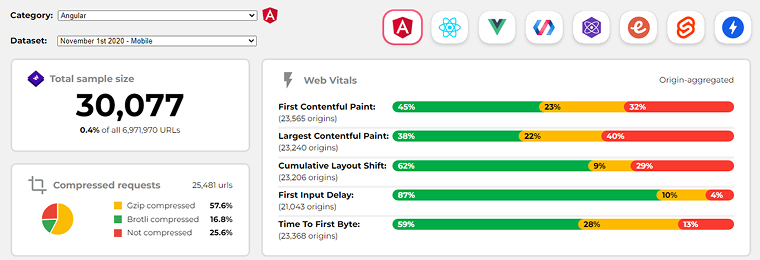
In addition to this, applications built with Angular often have faster load times compared to many other front-end frameworks. When a new route or component is requested, Angular can load it at high speed. Code-splitting (lazy loading) of an Angular application is carried out as per the rendering and application load requirements, improving initial load performance.
A Complete Framework
Angular is a powerful front-end platform used to create robust applications and high-end animations that enhance the user experience. The Angular team uses Angular’s intuitive API within its framework, which helps them create complex choreography and animation with low code. Besides, it comes with smart unit testing frameworks such as Karma and Jasmine that help in fixing the broken code anytime. Basically, Angular comes with more than 11 built-in testing modules that help the web development team to make sure that the code is error-free. Angular also allows developers to create modern web platform capabilities for every business.
Angular Technical Features
Let’s explore technical aspects of Angular,
MVC Architecture
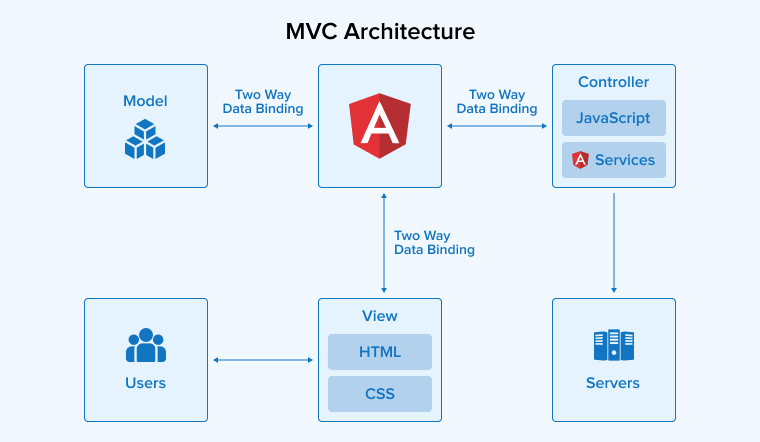
In the Model-View-Controller (MVC) architecture, the app’s data and business logic are managed by the Model, and the user interface is handled by the View. The Controller acts as a connector between the Model and View layers. MVC architecture splits the application into these distinct layers and enables the developer to write code that connects them. In Angular apps, much of the wiring between layers is provided by the framework, which can reduce the amount of code developers must write and save development time.
Efficient Two-Way Data Binding
Be it any Angular version, one of the most important features of this framework is its two-way data binding system. In this framework, the View layer represents the Model layer. This means that they stay in perfect synchronization. One change made in the model can be seen in the view model automatically. This decreases web development time.
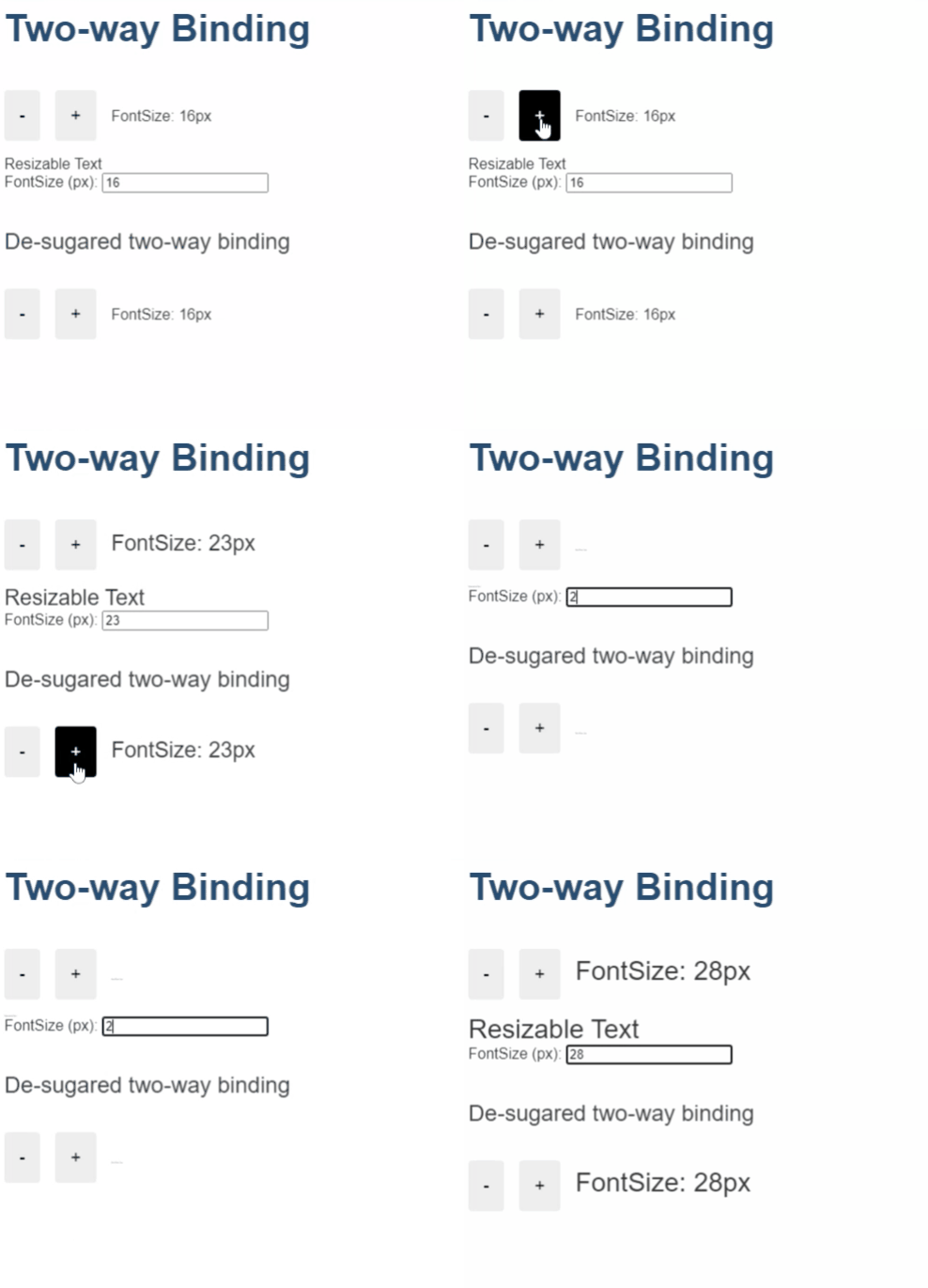
Read more on Two-Way Data Binding
Less Code Framework
Though there are different Angular versions available in the market, this framework, on the whole, offers a low-code approach in comparison to other front-end technologies. The developer doesn’t need to write separate code for linking the layers of the MVC architecture. And no specific code is required to view the app manually. Besides this, the directives in Angular are isolated from the app code. Therefore, the very little code requirement and isolation of directives together help in minimizing the development time.
Angular CLI
The Angular CLI follows the best approach for frontend development in the market. It is possible because of the striking built-in features of SCSS routing or support. There are some common Angular CLI commands, such as ng-add and ng-new, which enable developers to find out ready-made features with ease.
Learn more about the development of the #Angular CLI over the past few months and where it’s heading.
Learn about the progress that the #Angular CLI has made in the last few months, and find out where it's headed https://t.co/vJ7sMVnden
— Angular (@angular) September 20, 2017
Some of the basic Angular CLI commands are –
- ng Generate: This CLI helps the developers in creating new services, adding components, pipes, and routes.
- ng New: It is known as a primary initiative for the development of an Angular app and it can also be used to create a new workplace.
- ng Serve: This CLI allows the developers to test the Angular apps on a local server.
CDK and Angular Material
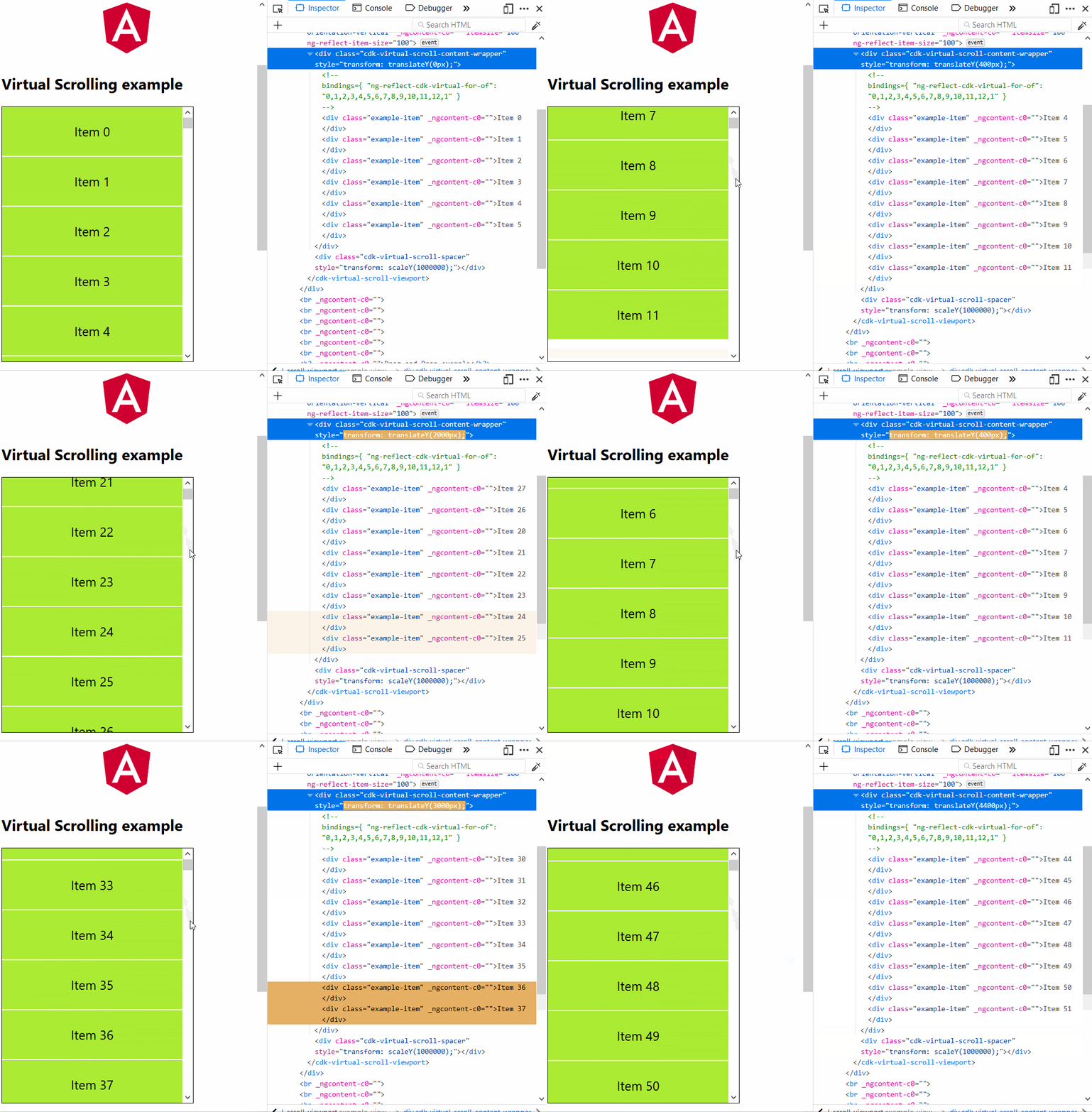
As one of the best front-end programming languages, Angular has been improving its CDK (Component Development Kit) with new features and the latest versions. Virtual scrolling and refreshing are the best features that the latest version of Angular CDK has to offer. This means that the developer can see the system being dynamically loaded and unloaded from the DOM element. And all this is carried out to create a large list of high-performing app data.
The Angular CDK includes accessibility features to enable the development of apps for all users. Check here!
The Angular CDK provides accessibility utilities to allow you to build applications for everyone! #31DaysofAngular https://t.co/qs5RA10aHs
— Angular (@angular) December 7, 2021
Besides dynamic loading, Angular also enables developers to import DragDropModule or ScrollingModule application features.
All angular Components Dev Kit are here – https://material.angular.io/cdk/categories
Virtual Scrolling
With Angular, Virtual Scrolling is very much possible and it helps the code to react to different scroll events. Basically, loading and unloading are DOM elements; this feature of Angular enables you to have an effective way of simulating an item.
TypeScript
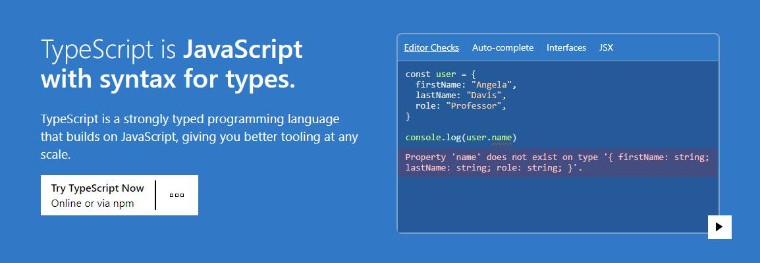
When Angular methods are combined with TypeScript, it offers a seamless experience to web developers. TypeScript is known as the best choice for frontend development because of its powerful template syntax. Besides, it is highly efficient when it comes to reducing development time and detecting bugs. This technology has the capability to automatically populate the root file configuration and this makes it the perfect option for Angular. In addition to this, TypeScript has richer interfaces, hybrid types for mobile development, enums, access modifiers, and more to create apps for modern browsers.
The Angular framework now endorses TypeScript 4.5!
Angular now supports TypeScript 4.5! #ngUpgrade
— Angular (@angular) January 19, 2022
Dependency Injection
Angular comes with built-in dependency injection. This makes the application development process easier for the programmers and they can create the best accessible applications in the market. This feature just asks about the code’s dependencies. For instance, if the developer types, ‘I need y’, the system will create the same and deliver it.
With injection-js, you may leverage Angular’s Dependency Injection outside the framework in TypeScript and JavaScript.
You can use Angular's Dependency Injection outside the framework in both TypeScript and JavaScript with injection-js https://t.co/wiM1fsCsX1 pic.twitter.com/rRoNvGaLw3
— Minko Gechev (@mgechev) January 23, 2017
Directives
When it comes to code generation in Angular, the directives of this framework are the most challenging features. The full-stack development team will have to create custom HTML tags, which will be served as custom widgets to the directives. Besides, the developers can also utilize these to get the behavior-driven new element ready. Manipulation of DOM attributes is also possible as per the requirements to help the Angular directives.
Wrap Up
As seen in this blog, Angular is a top open-source web app framework written in TypeScript. Developers use this framework mostly to create desktop, mobile, and web applications. It is the best choice for creating progressive web applications. The features of Angular make it the most popular framework to work with and some of these features are virtual scrolling, Angular CLI, two-way binding, event binding, and more.

Itesh Sharma is core member of Sales Department at TatvaSoft. He has got more than 6 years of experience in handling the task related to Customer Management and Project Management. Apart from his profession he also has keen interest in sharing the insight on different methodologies of software development.



Comments
Leave a message...