

Python has become one of the most widely adopted programming languages in modern software development, no matter whether it is web development, AI, data science, or automation. The Stack Overflow 2025 Developer Survey ranked Python as the most-used programming language worldwide, recording a seven-point rise in just twelve months. Today, every business domain is adopting Python to use AI features faster, run data workloads at scale, and modernize backend systems.
The challenge is that most companies do not carry enough in-house Python expertise to deliver high-quality Python solutions at speed. Hiring skilled Python developers locally is slow, expensive, and rarely flexible enough when project complexity changes mid-cycle. Python development outsourcing gives businesses a structured way to expand engineering capacity without putting more pressure on the in-house team.
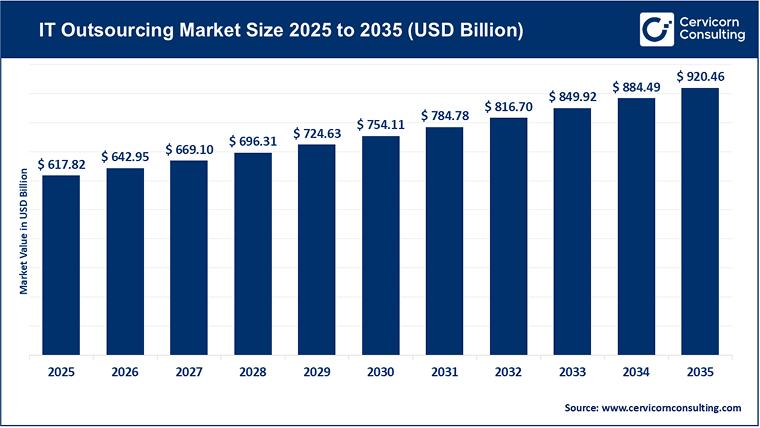
As a result, in 2025, the global IT outsourcing market reached over $617 billion, with a huge portion spent on software development.
This blog walks you through the benefits of Python development outsourcing, the types of Python projects having outsourcing potential, cooperation models, the selection process to choose the right Python development company, cost structure, and the common outsourcing challenges.
Why Outsource Python Development?
Outsourcing Python development is beneficial for businesses in multiple aspects. Some of the key reasons why businesses are moving towards Python development outsourcing are as follows:
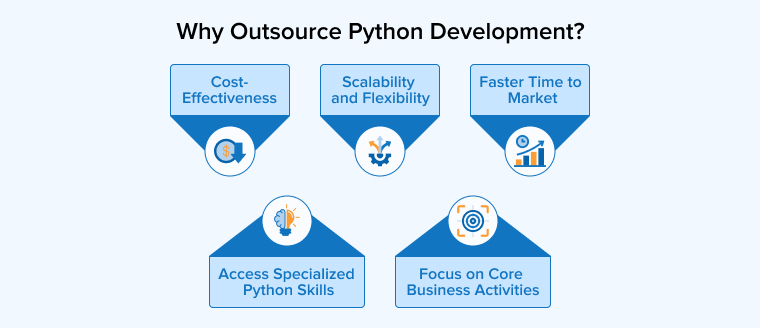
Cost-Effectiveness
Cost is the primary reason most businesses consider outsourcing. The cost savings from outsourcing are not limited to lower hourly rates; they go much beyond that. When you outsource Python development, you skip the high fixed costs that come with full-time hires, including recruitment fees, payroll overhead, office setup, training budgets, and idle capacity between projects. You also gain access to a skilled pool of Python developers from regions where engineering talent is strong but operating costs are lower. As a result, you get the same output without inflating your budget.
Access Specialized Python Skills
Python use cases are spread across very different domains, and each one demands its own depth of expertise. It’s often seen that the team that builds Python web applications rarely handles machine learning models, data science pipelines, or automation solutions.
Outsourcing gives you direct access to highly skilled Python developers who specialize in the exact area your project needs, be it backend development, AI, natural language processing, or data manipulation. You also get exposure to engineers who have worked across multiple Python frameworks like Django, Flask, and FastAPI, who can make crucial decisions like architecture and avoid early mistakes in the development process. Instead of training your in-house team for every new requirement, you bring in proven expertise on demand and keep your project moving without delay.
Faster Time to Market
Outsourcing Python development often delivers the most value due to faster execution. It helps you move faster by giving you instant access to experienced teams that can start working on your project from day one. Unlike an in-house team that may take weeks to build up on requirements, tooling, and project context, an outsourcing partner already has the skills, processes, and Python developers ready to start immediately. This lets you skip the long onboarding process and focus on actually building the product.
Beyond the quick start, outsourcing Python development provides a team of experienced developers with a proven track record of delivering high-quality solutions on time. If your outsourcing partner operates from different time zones, you benefit from the near-continuous development cycles, where work moves forward even after your local team’s working hours are over. The combined effect is faster project execution, shorter release cycles, and a clear advantage in time-to-market for the products you launch.
Scalability and Flexibility
It’s often seen that business needs do not stay constant across a project lifecycle. You might need two Python developers for a quick prototype development in the first quarter, while a complete Python development team in the next one to scale the product. Outsourcing Python development gives flexibility to scale the team up or down, like adding backend developers, data engineers, or QA specialists when the workload grows, and reducing the team when work slows. Thus, you can cope with the evolving project requirements without going through a fresh hiring cycle every time.
This flexibility also extends to engagement. You can switch between dedicated team and project-based models, hire Python experts for short sprints, or long-term projects with the same outsourcing partner. The results in a flexible setup that adjusts to your business needs whenever required.
Focus On Core Business Activities
Outsourcing Python development allows your internal team to focus on what actually moves the business forward, such as strategic decision-making, marketing, sales, and customer service. With an external team handling the technical work, your core team can focus on product strategy, branding, customer engagement, and long-term innovation, which directly impacts the revenue and creates real business value. This shift also reduces the operational load on senior leadership, allowing them to spend more time on growth opportunities, partnerships, and market expansion instead of day-to-day delivery.
When Should You Outsource Python Development?
The following are the critical scenarios when your company must seriously consider outsourcing for the project to be developed:
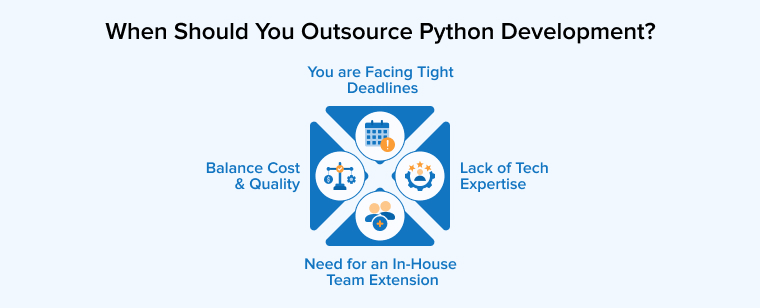
Need for an In-House Team Extension
Your internal team is already occupied with some existing project, and so, there is minimal to no capacity to take up any new Python project. Overloading the team leads to burnout, while postponing the project delays your roadmap.
Outsourcing solves this by adding extra Python developers to your existing workflow, who follow your standards and handle the new work without disturbing your team in their existing tasks. This way, your internal team keeps moving on its current priorities, and the new project still gets delivered on time.
You Are Facing Tight Deadlines
When you have fixed deadlines like a product launch, an investor demo, or a client release, time becomes the biggest challenge. Hiring a new developer in-house takes weeks, training them takes even longer, and you do not have that much time.
An outsourcing partner can start within days, with their developers, tools, and processes, so the work can begin almost immediately, helping you meet deadlines without compromising quality.
Lack of Tech Expertise
Python is a diverse language used across a wide range of areas, including web apps, APIs, machine learning, data science, AI, and automation. It is observed that most internal teams are strong in some of these but not all. When your project needs skills that your team members lack, asking them to learn it on the job slows everything down and often leads to costly mistakes. Outsourcing brings in specialists who have already built similar projects, which means they know what works, what to avoid, and how to make the right technical decisions early in the development process.
You Need to Balance Cost Without Sacrificing Quality
Hiring Python developers in the US or Western Europe is quite expensive. Therefore, it does not always make business sense to hire them for a short or one-time project. Outsourcing gives a better way forward by connecting you with experienced developers from countries with lower operating costs and abundant talent availability. You pay only for the work and the time you actually need, making it suitable for changing workloads, fixed timeline projects, or testing ideas before hiring a full-time team.
What Python Projects Can Be Outsourced?
Before considering Python development outsourcing, it’s important to know what kind of project is best suited for outsourcing to take the maximum advantage of it. Below are a few examples of projects that you can outsource:
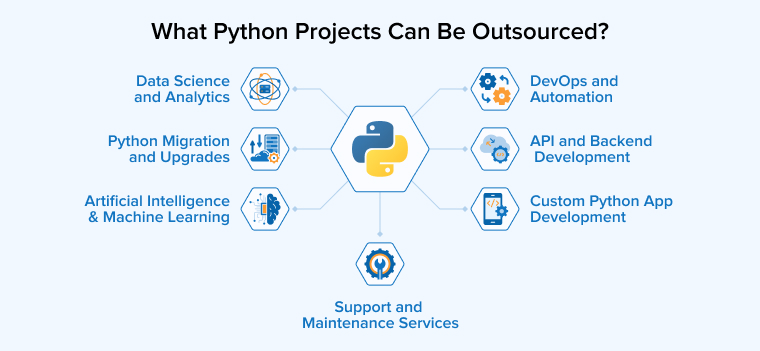
- Artificial Intelligence and Machine Learning: Outsourcing works well for AI and machine learning projects dealing with predictive models, recommendation engines, computer vision, natural language processing, and intelligent automation. You get specialists who have built and deployed similar models in production that reduce research time and help you build and launch AI features faster.
- Custom Python Application Development: Many businesses outsource building custom Python web applications, internal tools, SaaS platforms, and enterprise software. An experienced outsourcing partner handles the architecture, coding, testing, and deployment, while your internal team focuses on strategy and business priorities.
- API & Backend Development: Building scalable APIs and backend systems is one of the most common reasons companies outsource Python development. Outsourced Python developers can quickly design and build REST APIs for a mobile app, microservices for a SaaS platform, or high-traffic backends using their experience. As a result, the speed of product delivery increases, and delays are reduced.
- Python Migration & Upgrades: Migrating from older Python versions, replacing legacy frameworks, or upgrading existing systems becomes difficult for most internal teams to handle their regular work. Outsourcing lets specialists handle the migration safely, with proper testing and minimal downtime, while your team focuses on building new features.
- DevOps and Automation: Python is widely used for DevOps, CI/CD pipelines, infrastructure scripting, and process automation. Outsourcing these tasks gives you DevOps engineers who already work with tools like Docker, Kubernetes, Jenkins, and Ansible, which helps you build reliable systems faster and reduce manual work.
- Data Science & Analytics: Data-heavy projects involving data pipelines, ETL processes, reporting tools, and advanced analytics are a strong fit for outsourcing. It provides experienced data engineers and Python developers, who can quickly develop production-ready solutions by turning raw data into useful business insights using libraries like Pandas, NumPy, and PySpark.
- Support and Maintenance Services: After deploying a Python product into the live environment, it still requires regular bug fixes, performance improvements, security patches, and feature updates. Outsourcing support and maintenance keeps your application stable and up to date, freeing senior developers to focus on new product development instead of ongoing operational tasks.
The Best Cooperation Models in Python Outsourcing
The right cooperation model depends on your project size, timeline, and the level of involvement you want in day-to-day delivery. Let us now discuss some of the most popular engagement models you can consider for outsourcing:
- Fixed Price Model: This model works best when your project requirements are clearly defined from the start. You set a fixed scope, fixed timeline, and fixed cost with the outsourcing company, which makes budgeting simple and predictable. It is a strong fit for short and well-scoped Python projects.
- Time and Materials Model: Here, you pay based on the actual hours spent and the resources used. This model works well when project requirements are likely to change, the product is still under validation, or the scope can evolve. It gives you the flexibility to adjust priorities without renegotiating contracts.
- Dedicated Team Model: With a dedicated team, you get a group of Python developers who work exclusively on your project for a long period. The dedicated team becomes an extension of your in-house staff, follows your processes, and stays committed for the entire project lifecycle. This model is ideal for long-term projects.
- Project-Based Model: In this setup, the IT outsourcing company takes complete ownership of the project from start to finish, i.e, planning, development, testing, and deployment. You share the goals and final deliverables, and the team handles the rest. This makes it suitable for projects where you want minimal day-to-day involvement.
Step-by-Step Process to Outsource Python Development
A structured process keeps the entire engagement on track and prevents the common mistakes most businesses make when outsourcing for the first time.
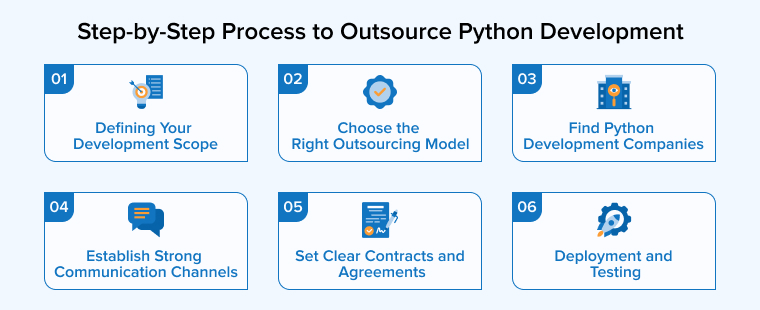
Step 1: Defining Your Development Scope
Before reaching out to any outsourcing company, be clear on what you want to build and why. A clear scope helps you choose the right partner, set the right budget, and avoid expensive changes later in the project. This step is about putting all the key decisions on paper before development starts.
- Business Goals: Write down what you want the Python solution to achieve, like a product launch, automation of a workflow, or a data platform.
- Features and Modules: List the core features, integrations, and modules that should be part of the first version.
- Tech Preferences: Note any preferred Python frameworks, databases, or cloud platforms your project should use.
- Timeline and Milestones: Set rough timelines and key milestones so the outsourcing partner can plan delivery accordingly.
Step 2: Choose the Right Outsourcing Model
The cooperation model you select shapes how the project is priced, managed, and delivered. The right choice depends on how clear your scope is, how flexible you want the engagement to be, and how much ownership you want the partner to take. Pick the model that matches your project size, timeline, and level of involvement.
- Fixed Price: Best when scope and requirements are clearly locked in.
- Time and Materials: Best when the scope is likely to change during the project.
- Dedicated Team: Best when you need a long-term team that works exclusively on your product.
- Project-Based: Best when you want the partner to own the full delivery from start to finish.
Step 3: Finding the Perfect Python Development Companies
Choosing the right Python development partner is the most important decision in the entire process. The goal is to find a company that has the right technical depth, a strong delivery record, and a working style that fits your business. Look beyond just price and focus on long-term reliability.
- Portfolio Review: Look at past Python projects, industries served, and the complexity of work delivered.
- Technical Expertise: Check the team’s depth in Python machine learning libraries, frameworks, AI, and cloud platforms.
- Client Reviews: Read reviews on platforms like Clutch, GoodFirms, and G2 to understand real client experiences.
- Communication and Culture Fit: Make sure the team communicates clearly, shares regular updates, and aligns with your working style.
Step 4: Establish Strong Communication Channels
Most outsourcing problems arise due to a lack of proper communication and collaboration. Setting up clear channels and expectations from day one keeps the project moving smoothly and avoids misunderstandings. The goal is to create a steady rhythm of updates, decisions, and quick problem-solving.
- Daily or Weekly Stand-Ups: Set a fixed schedule for status calls to maintain progress visibility.
- Collaboration Tools: Use tools like Slack, Microsoft Teams, Jira, and Trello to keep work and conversations organized.
- Single Point of Contact: Assign one person on each side to manage communication and avoid misunderstanding.
- Time Zone Planning: Define overlapping working hours to make real-time discussions easier when needed.
Step 5: Set Clear Contracts and Agreements
A strong contract protects both sides and maintains a clear record of the agreed-upon terms and conditions. It should clearly mention the scope, payments, ownership, and confidentiality clauses to avoid any confusion later. Take time to review everything before signing, and do not skip any legal details in a hurry to start the project faster.
- Scope of Work: Document the deliverables, timelines, and acceptance criteria in detail.
- Payment Terms: Define milestone-based or retainer payments to keep the costs predictable.
- Intellectual Property Rights: Make sure the contract clearly states that you own the code, designs, and final product.
- NDAs and Confidentiality: Include a Non-Disclosure Agreement (NDA) to protect sensitive business and product information.
Step 6: Deployment and Testing
Once the development work is finished, the focus shifts to making sure the product is stable, secure, and ready for real users. Proper testing and a planned rollout reduce launch risks and protect your brand. This stage also sets up the structure for ongoing support after deployment in the live environment.
- Quality Assurance: Conduct unit testing, integration testing, and user acceptance testing before going live.
- Staging Deployment: Deploy to a staging environment first to catch any last-minute issues.
- Production Release: Move the final build to the live environment with a planned rollout strategy.
- Post-Launch Support: Set up monitoring, bug fixes, and performance tuning to keep the product stable after launch.
Challenges of Python Development Outsourcing
As we saw above, outsourcing offers multiple benefits. But it also comes with a few challenges you should plan for before signing any contract.
Communication Barriers
Communication is one of the most common challenges in outsourcing, especially when teams sit in different countries and time zones. Delays in replies, unclear status updates, or language gaps can slow down decisions and create confusion around requirements. Setting fixed update schedules, shared tools, and a single point of contact keeps everyone aligned.
Quality Control Issues
Not every outsourcing partner delivers the same quality. Many times, the difference shows up only after the work has started. Poor coding standards, weak testing, or shortcuts in design can lead to bigger problems in the future. Regular code reviews, clear acceptance criteria, and strong QA processes help you catch issues early, ensuring the reliability of the final output.
Cultural Differences
Working with teams from different cultures can lead to small but meaningful gaps in how feedback is given, how deadlines are communicated, and how priorities are interpreted. These differences are not major issues, but they still need attention. Setting clear expectations, encouraging open conversations, and respecting how the other side works help both teams collaborate smoothly in the long term.
Managing Security and Compliance Risks
When you outsource Python development, your code, customer data, and business logic often move beyond internal systems. Without proper safeguards, this creates risks such as data leaks, IP theft, and compliance violations. Strong NDAs, secure access controls, encrypted environments, and clear data handling policies are essential to protect your product and business.
Best Practices for Successful Python Outsourcing
There is a set of standard best practices to keep your outsourcing engagement on track. That help you get the most value from your Python outsourcing development partner.
1. Regularly Monitoring Progress
Regular tracking of progress helps avoid surprises and lets you see how the work is moving forward. It also helps you catch small issues early, before they cause delays or budget overruns. The goal is to stay informed without micromanaging the team.
- Weekly Status Reports: Ask for short, written updates that cover completed work, ongoing tasks, and blockers.
- Sprint Reviews: Hold regular sprint reviews to check what has been delivered and decide what to do next.
- Project Dashboards: Use tools like Jira, Trello, or Asana to monitor tasks, timelines, and team workload in real time.
- Quality Checks: Review code, test results, and performance reports at the end of each milestone.
2. Emphasizing Agile Development Practices
Agile gives outsourcing engagements the flexibility they need to adapt as priorities shift and requirements evolve. It breaks the project into smaller, manageable cycles, which makes delivery faster and feedback easier. This approach works well for both startups and enterprises that want steady progress without long waiting periods.
- Short Development Sprints: Plan work in two to three-week sprints to keep delivery focused and predictable.
- Continuous Feedback: Share feedback after every demo so the team can adjust quickly and improve the product.
- Backlog Grooming: Keep the backlog updated with clear priorities so the team always works on what matters most.
- Iterative Releases: Release features in smaller releases instead of waiting for one big launch at the end.
3. Securing a Talented Python Development Team
The success of any outsourcing engagement depends heavily on the people doing the work. A talented Python development team brings the right mix of technical skills, problem-solving ability, and delivery discipline. If you invest time in selecting the right team early in the process. It’ll prevent rework, missed deadlines, and quality issues later.
- Skill Assessment: Evaluate developers through technical interviews, coding tests, or sample tasks before onboarding.
- Domain Experience: Prefer teams with real experience in your industry or in similar Python projects.
- Senior Leadership: Make sure the team includes senior engineers who can guide architecture and key technical decisions.
- Long-Term Commitment: Choose a partner that can keep the same core team on your project to maintain consistency and context.
Cost of Outsourcing Python Development Services
Below are the key factors that determine the cost of outsourcing Python development services:
Fixed Price Model
In this model, you pay a fixed price for the entire project. A small Python project usually costs around $5,000 to $20,000, while mid-sized ones fall between $25,000 and $80,000. Larger enterprise projects can cost $100,000 or more. This model works best for short, well-defined projects where the scope is clear from day one.
Time and Materials Model
Here, you pay based on the actual hours worked. Hourly rates typically range between $25 and $150, depending on the developer’s experience and location. The total cost depends on team size, seniority, and project duration. This model fits projects where requirements may change over time, and flexibility is more important than fixed pricing.
Dedicated Team Model
In this setup, you pay a fixed monthly cost per developer. Rates usually range from $3,000 to $8,000/month per developer. With higher costs for senior and specialised roles like AI or machine learning developers. It is the most cost-efficient choice for long-term projects that need consistent involvement.
Project-Based Model
The outsourcing partner takes the responsibility of end-to-end delivery, and the cost is decided in advance after the discovery phase. Most full-scope Python projects in this model fall between $30,000 and $200,000, depending on complexity and timelines. This model suits businesses that prefer fixed outcomes without involvement in day-to-day management tasks.
Region-Based Cost Differences
Cost varies significantly based on the location of the dedicated development team. Below are the typical hourly rates for Python developers across major outsourcing regions:
- North America (US, Canada): $80 to $150 per hour
- Western Europe (UK, Germany, Netherlands): $70 to $130 per hour
- Eastern Europe (Poland, Ukraine, Romania): $35 to $70 per hour
- Latin America (Brazil, Mexico, Argentina): $30 to $65 per hour
- Asia (India, Vietnam, Philippines): $20 to $50 per hour
Most businesses choose regions like India, Eastern Europe, and Latin America because they offer skilled developers at significantly lower rates. This is the reason why these regions account for the largest share of Python outsourcing globally.
Conclusion
Python development outsourcing has become a practical way for businesses to build faster, manage costs better, and access specialized talent from the global talent pool. First of all, understand your project goals and expected outcomes by discussing them with the internal team members and other stakeholders. This will give you a clear idea of the level of engagement your project requires. And how to find the appropriate Python development outsourcing partner accordingly. This will make outsourcing not just a cost-saving tactic but a long-term strategy that supports product growth, scalability, and steady innovation.
FAQs
Yes, outsourcing Python development is secure. When the right safeguards are used, such as NDAs, clear data protection policies, and secure access controls. Choosing vendors with a proven track record and compliance with standards like GDPR, ISO 27001, or SOC 2 adds another layer of trust to the engagement.
The right Python outsourcing company should match your technical needs and working style. Assess their experience with Python frameworks, portfolio, client reviews on platforms like Clutch and GoodFirms, communication style, time zone compatibility, and pricing transparency for reliable and long-term results.
Development time depends on project complexity and scope. Simple apps usually take 1 to 3 months, medium-sized projects take 3 to 6 months, and complex platforms or AI-driven solutions often take 6 months or more. A clear scope and a dedicated team help keep delivery on schedule.

Niket Shah oversees technology projects at TatvaSoft, blending hands-on expertise with a passion for crafting innovative solutions. He thrives on turning complex challenges into impactful results.



Comments
Leave a message...