


The healthcare industry is rapidly evolving, driven by the requirement for efficiency, transparency, and improved patient experiences. Managing multiple departments can be complex without an integrated system. This is where a Healthcare ERP System becomes indispensable. In an era where operational efficiency and patient satisfaction define success, adopting a robust Healthcare ERP System is no longer a luxury; it’s a necessity.
As hospitals and clinics continue to digitize their workflows, partnering with a healthcare software development company enables organizations to design ERP solutions tailored to their specific needs. Through intelligent integration and automation, ERP technology is reshaping healthcare management and paving the way for a more connected, efficient, and patient-focused future.
In this blog, we’ll understand ERP systems, their role in healthcare, advantages, features, and how to build an effective healthcare ERP system.
What Are ERP Systems?
Enterprise Resource Planning (ERP) is a software system that integrates all business operations into a single platform. Instead of using separate tools for finance, HR, sales, inventory, and other functions, ERP combines everything into a single platform. This allows authorized users to access real-time information, share data easily across departments, and make faster, more informed decisions. By connecting different areas of a business, ERP eliminates data silos and improves collaboration among teams.
In the past, ERP systems were installed on local computers. Now, most are cloud-based, making them more flexible, scalable, and cost-effective. Companies can customize ERP solutions to fit their unique processes and goals. Overall, ERP systems make it easier for businesses to operate efficiently, reduce errors, and adapt quickly to changing needs, creating a more connected and responsive working environment across all departments.
The Role of ERP Systems in Healthcare
In the healthcare industry, an ERP system serves as an all-in-one solution to improve efficiency, reduce errors, and enhance patient care. By integrating critical information across departments, ERP software ensures that doctors, nurses, and administrative staff can quickly and accurately access the data they need. Healthcare organizations face two major challenges: delivering high-quality patient care and managing costs effectively. ERP systems help address both by streamlining administrative, financial, and operational processes.
Medical ERP systems manage multiple functions, including patient information, billing, payroll, inventory, supply chains, and regulatory compliance, all within a single platform. This centralization eliminates data silos, improves collaboration between departments, and ensures smoother day-to-day operations. Modern ERP solutions also incorporate advanced technologies such as artificial intelligence, predictive analytics, and interoperable data exchange, enabling more personalized and efficient care for patients.
Financial management becomes simpler with ERP, as tasks like budgeting, billing, and expense tracking are automated. By combining operational, clinical, and financial management into one system, ERP not only improves patient experiences but also strengthens organizational efficiency, resource utilization, and overall performance.
7 Benefits of Implementing an ERP System in Healthcare
ERPs offer many benefits to hospitals and other medical clinics. Healthcare providers are aiming to leverage existing technologies to lower costs and deliver high-quality patient care. The main advantages of ERP in healthcare are:
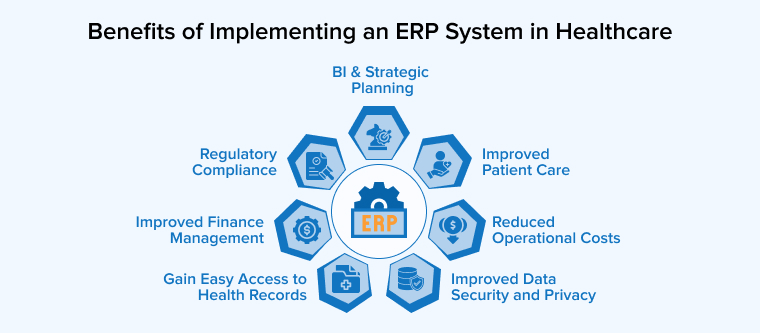
Improved Patient Care
A healthcare ERP system significantly improves patient care by providing doctors with quick access to accurate medical data, reducing paperwork, and saving time. This allows healthcare professionals to focus more on patients instead of administrative tasks. It also enhances communication between departments, ensuring smooth coordination and faster treatment decisions. With automated workflows and centralized patient information, hospitals can deliver better, faster, and more organized care, leading to higher patient satisfaction and improved overall outcomes.
Improved Data Security and Privacy
Cloud-based ERP systems in healthcare enhance data security by protecting sensitive patient information through encryption, access controls, and activity tracking. Only authorized users can view or update confidential data, reducing the risk of breaches. These systems also support compliance with healthcare privacy laws and improve patient trust. With features like real-time monitoring and role-based permissions, ERP solutions ensure that patient data remains secure while allowing healthcare staff to deliver safe and efficient services.
Reduced Operational Costs
ERP systems help healthcare providers manage costs effectively by integrating accounting, inventory, and HR into a centralized platform. They automate routine tasks, improving accuracy and reducing manual effort. By tracking expenses and optimizing resource use, hospitals can lower operational and labor costs. ERP systems also support hybrid environments, combining new and existing software to ensure smooth transitions. With enhanced data visibility, healthcare organizations can allocate budgets wisely and maintain financial stability while improving efficiency.
Improved Finance Management
A healthcare ERP system simplifies financial management by automating key tasks such as billing, budgeting, payroll, and expense tracking. It centralizes financial data, making it easier to monitor cash flow, control spending, and ensure compliance with regulations. By integrating all financial functions into a single system, the ERP reduces manual errors and enhances accuracy in reporting.
Healthcare providers can analyze financial data to identify cost-saving opportunities, negotiate better supplier rates, and improve revenue cycle performance. This ultimately leads to stronger financial stability and more efficient hospital operations.
Gain Easy Access to Health Records
Managing multiple systems can be stressful for healthcare staff, but ERP systems help reduce this burden. By centralizing patient records and automating data management, ERP makes critical information accessible instantly. Doctors, call center staff, and telehealth providers can quickly retrieve medical histories, insurance details, and other important data, improving patient care, speeding up decision-making, and enhancing the overall healthcare experience for both patients and providers.
Regulatory Compliance
Healthcare ERP systems help organizations maintain regulatory compliance by providing transparent, traceable workflows and automated reporting. They generate accurate, up-to-date documentation for audits and regulatory requirements, reducing manual effort. By integrating features for data security, privacy, and proper audit trails, these systems ensure patient information remains confidential, accessible, and accurate, helping healthcare facilities follow industry regulations and maintain operational integrity.
BI & Strategic Planning
A healthcare ERP system provides accurate data to support strategic decision-making and improve operational performance. It collects information on patient visits, budgets, and requisitions, enabling analysis to identify areas needing improvement. By applying these insights and best practices, healthcare facilities can enhance overall efficiency, support better resource management, and equip physicians with the information needed to deliver consistently high-quality patient care.
Types of ERP Systems in the Healthcare
We’ll look at the three types of healthcare ERP systems based on their implementation approach:
On-Premise ERP System
On-premise ERP software is installed and maintained on an organization’s own computers, requiring an internal IT team. It does not need an Internet connection to access data, as servers are owned by the organization. This setup gives large businesses full control over all modules and system updates.
Cloud-Based ERP System
Cloud ERP is provided by third-party vendors and accessed via the Internet, allowing users to access it from anywhere at any time. The vendor handles maintenance, eliminating the need for in-house IT staff. It is generally more affordable than on-premise solutions, making it ideal for small businesses seeking flexible and cost-effective ERP options.
Hybrid ERP Systems
Hybrid ERP systems combine the benefits of on-premise and cloud-based solutions, offering flexibility, control, and customization. This approach is ideal for mid-sized or growing healthcare organizations that want to integrate cloud modules with existing on-premise software. Data is managed both locally and on the cloud, allowing secure access and operational efficiency.
Hybrid ERP provides a balance between cost, scalability, and personalization, making it a suitable choice for healthcare institutions seeking to optimize internal processes while maintaining flexibility for future growth.
Key Features of Healthcare ERP System
A healthcare ERP system requires specific features to meet the unique demands of the healthcare industry, differentiating it from ERPs in other sectors. Key functionalities include:
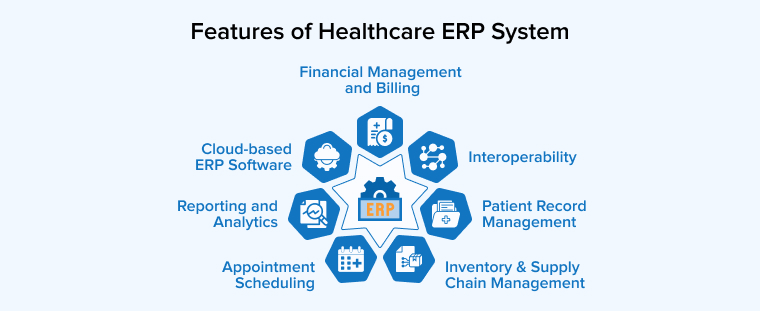
Appointment Scheduling
Effective appointment scheduling is crucial for smooth healthcare operations. A good ERP system enables patients to book visits online, view real-time doctor availability, and receive reminders. It prevents scheduling conflicts, reduces wait times, and automatically updates available slots when cancellations occur. This feature helps healthcare providers manage appointments efficiently and improves overall patient satisfaction.
Inventory and Supply Chain Management
Inventory and procurement are vital for smooth hospital operations. A healthcare ERP system helps track medical supplies, lab results, and equipment while monitoring stock levels, expiration dates, and usage rates. Automated ordering and supply chain management reduce delays, prevent shortages, and control costs. With real-time insights, healthcare providers can maintain essential resources, streamline procurement, minimize waste, and ensure better patient care.
Patient Record Management
Patient information includes demographic details, medical history, insurance data, prescriptions, test results, and diagnoses. Healthcare providers cannot remember every detail about every patient; hence, they can use this module to streamline their operations and provide quality services to their patients
Cloud-based ERP Software
Cloud-based healthcare ERP offers flexible, scalable, and cost-effective solutions for healthcare facilities. It allows secure access to patient data anytime and anywhere, reducing the need for on-site infrastructure and lowering maintenance costs. Additionally, it ensures strong data security and helps organizations meet compliance requirements, making it ideal for modern healthcare settings.
Interoperability
Interoperability in healthcare ERP systems enables different platforms, like EHR and billing, to connect and share data smoothly. This seamless communication ensures that patient information, test results, and medical records are securely exchanged between departments and providers. As a result, it improves care coordination, reduces duplicate work, and enhances both patient safety and overall satisfaction within the healthcare system.
Financial Management and Billing
Healthcare ERP systems simplify complex billing by automating insurance claims, invoicing, and payment tracking. They link financial data to patient records and support multiple payment methods, improving accuracy and reducing errors. These systems include features like accounts payable, accounts receivable, and general ledger, helping healthcare providers manage finances efficiently while streamlining operations and accelerating revenue collection through clear, integrated financial processes.
Reporting and Analytics
A healthcare ERP system with robust reporting and analytics capabilities helps hospitals track performance and analyze important trends. Real-time data and customizable dashboards enable staff to monitor patient care, resource use, and finances quickly and clearly. This information supports faster, smarter decisions that improve operations and patient outcomes. By using these insights, healthcare teams can better plan resources, manage costs, and ensure efficient, high-quality care throughout the organization.
7 Steps to Implementing ERP Software for Healthcare
Implementing an ERP system needs proper planning and teamwork. When done effectively, it simplifies operations, boosts productivity, and gives useful information for better decision-making across the organization. Below is a step-by-step guide to help you through the process.
Step 1: Identify Your Healthcare Needs
You must have a clear understanding of why you require the healthcare ERP system. Different healthcare providers, such as pharmaceutical companies, laboratories, health insurance companies, clinics, medical facilities, etc., have unique requirements. To determine your business needs, follow the steps below:
- Thorough Business Analysis: Get clarity on the problem domain, scope, risks involved, key performance indicators, features, and functionalities; estimated costs, data integration requirements, future scalability needs, etc. Understanding needs, costs, and expected results ensures the ERP system effectively supports healthcare operations and long-term growth.
- Take Reviews from Stakeholders: Involving stakeholders from all departments early helps identify their needs and ensures the ERP system meets everyone’s requirements. Their feedback supports better planning, clear goals, and effective decision-making, leading to a smoother and more successful implementation process.
- Analyze the Existing System: Carefully review your current systems and workflows to identify gaps and inefficiencies. Analyze data quality, reporting, and IT setup to find areas for improvement. Understanding these issues helps define success and ensures the new ERP system effectively enhances operations, accuracy, and overall organizational performance.
Step 2: Vendor Comparison and Selection
Now that you have clarity on the business requirements, it’s time to research and select the appropriate vendor who can streamline the complex ERP development and implementation process.
Take the following aspects into consideration while opting for a suitable vendor:
- Industry Expertise: Conduct comprehensive market research to find vendors with proven expertise in creating top-tier, customized healthcare solutions. Vendors must have a proven track record of successful ERP implementations, with verifiable experience working with companies of a comparable size within the healthcare industry. Companies like TatvaSoft are reputed for delivering advanced software development services.
- Solution Fit: Select an ERP vendor that matches your organization’s goals and system requirements. Evaluate integration capabilities, security, scalability, and support. Review demos, case studies, and feedback from other healthcare users to ensure the solution is reliable, flexible, and future-ready.
- Cloud or On-Premise: Select the type of ERP system based on whether the vendor provides an affordable and scalable cloud-based solution, a costly on-premise system, or both.
- Client Feedback: Get reviews and feedback from previous clients to understand their experience with the vendor. Their insights will help you choose a reliable ERP provider with proven performance and service quality.
Step 3: Plan Your ERP Implementation Process
Implementing an ERP system in healthcare requires careful planning, including setting a clear deployment timeline, allocating necessary resources, and establishing a strong communication plan. A skilled project manager should oversee the process to ensure it stays within budget and meets deadlines.
One of the biggest challenges is migrating data from legacy systems, such as financial records and patient information. Choosing the right data migration strategy is essential to prevent errors and ensure a smooth transfer. Proper planning and execution during data migration help maximize the ERP system’s effectiveness and the overall benefits for the organization.
Step 4: Design and Develop a Healthcare ERP Product
A healthcare ERP system should be flexible and modular, allowing departments like clinical, administrative, and financial to operate independently while sharing data seamlessly. Data management must be secure, well-organized, and scalable, especially when handling sensitive patient information and large records. Start with a basic ERP version covering essential workflows, such as patient intake, billing, and medical record access, and test it with real users to gather feedback and make improvements. The UI/UX design team should create interactive, user-friendly interfaces using tools like Adobe XD and InVision, adhering to web, iOS, and Android design guidelines to ensure responsiveness across different devices.
Frontend developers use technologies like CSS, JavaScript, React.js, Angular, and Vue.js to build the interface, enabling dynamic data display and user interaction. Backend developers use languages like Java or PHP and frameworks such as Grails or Laravel to implement core features, leveraging open-source ERP frameworks and communication protocols like WebSockets for smooth client-server interaction. Database experts set up systems using MySQL or MongoDB, creating secure, scalable, and efficient databases. Additionally, developers use tools like JDBC or PDO to ensure reliable data communication between the ERP application and databases.
Step 5: Train & Educate Your Medical Staff
Successful healthcare ERP implementation relies on effective user adoption. Provide all staff, from clinicians to administrators, with tailored training on system functionality, workflows, and troubleshooting. Offer hands-on sessions, user manuals, and ongoing support. Emphasize the importance of the ERP system and create a culture of continuous learning and feedback to help staff adapt and use the system efficiently.
Step 6: Test the Healthcare ERP System
Healthcare ERP systems must be thoroughly tested to ensure accurate data, proper integrations, and reliable performance. Testing should be conducted in controlled environments, use pilot programs, and involve end users to identify issues early. Developers and QA teams should perform unit, integration, and system tests, making corrections as needed to ensure security, efficiency, and regulatory compliance.
Step 7: Deployment & Continuous Support
Launching a healthcare ERP requires careful planning, risk management, and clear communication with all departments. Use a detailed go-live plan, consider phased deployment, and ensure seamless integration with existing systems. Developers should support data migration, test functionality, and help create training materials so staff can use the ERP effectively.
Final Thoughts
Implementing a healthcare ERP solution requires more than just installing software; it demands careful planning, strategic alignment, and a clear understanding of industry-specific needs. Engaging stakeholders, managing change effectively, and ensuring regulatory compliance are essential for success. By focusing on user training, data security, scalability, and continuous improvement, healthcare organizations can fully utilize ERP systems to streamline operations, enhance patient care, and drive innovation. With a thoughtful approach, an ERP solution becomes a powerful tool to improve efficiency, support decision-making, and achieve better outcomes across the healthcare facility.
FAQs
ERP (Enterprise Resource Planning) is software that integrates core business processes such as finance, HR, inventory, and others. EMR (Electronic Medical Record), on the other hand, deals with managing the health information of patients in a particular healthcare organization.
Healthcare ERP solutions bring all clinical and operational data into one platform, helping doctors make quicker decisions, reduce paperwork mistakes, streamline schedules, manage supplies better, and deliver smoother, more efficient patient care overall.
Cloud-based ERP suits most modern healthcare providers by cutting initial costs, scaling easily, supporting compliance updates, and enabling smooth system integration. In contrast, on-premises ERP fits large organizations that require strict data control, deep customization, or reliable operation with limited internet access.
Selecting the right healthcare ERP starts with matching the system to operational goals. Organizations should focus on compliance-ready, scalable platforms, review required modules, confirm EHR compatibility, evaluate vendor credibility, test the software, and analyze long-term costs before deciding.

Garvit Shukla is a healthcare technology consultant at TatvaSoft. He collaborates with a team of developers to meet client requirements for healthcare software solutions. With a decade of experience in software development, he contributes to TatvaSoft's ability to deliver robust outcomes.



Comments
Leave a message...