

With the increasing population and rise of diseases, healthcare systems around the world are under constant pressure to deliver better outcomes with limited resources. Inefficient clinical workflows, a huge burden of administrative functions, inadequate staffing, and non-compliance with healthcare standards are some of the significant roadblocks in providing quality care to patients. In many healthcare facilities, patient data is often scattered across multiple systems, delaying decisions and affecting operational efficiency.
Generative AI is emerging as a strong solution to all these problems. It helps reduce the burden of healthcare organizations by automating routine tasks, increasing diagnostic accuracy, promoting active participation, and so on. According to Grand View Research, the global Generative AI in healthcare market size is projected to reach USD 28.2 billion by 2033, growing at a CAGR of 33.3% from 2026 to 2033. Healthcare organizations are effectively partnering with healthcare software development companies to develop Generative AI-integrated healthcare systems.
In this blog, we’ll understand how Generative AI can help improve global health outcomes by exploring its benefits, use cases, implementation strategy, and considerable challenges.
What is Generative AI in Healthcare?
Generative AI refers to a category of artificial intelligence that uses generative models to create new content, including text, images, molecular structures, and synthetic data. Unlike traditional AI models that classify or predict results based on existing inputs, Generative Artificial Intelligence (Gen AI) produces original outputs by learning patterns from large volumes of training data.
In the healthcare sector, Gen AI applies these capabilities across clinical and operational domains. Large language models (LLMs) power documentation and summarization tasks. Natural language processing enables chatbots to respond to patient queries and converts unstructured clinical notes into structured formats. Generative adversarial networks produce synthetic medical images for research and education. These Generative AI models analyze electronic health records and medical research to deliver insights that strengthen clinical workflows.
Machine learning algorithms within these systems identify patterns in healthcare data that manual analysis might miss. Retrieval-Augmented Generation (RAG) combines the strengths of pre-trained models with domain-specific health records to produce contextually accurate results. Natural Language Processing (NLP) also supports converting complex medical terminology into patient-friendly summaries. Machine learning continues to advance the precision of these Generative AI models across multiple applications.
The scope of healthcare Generative AI extends well beyond clinical applications. Gen AI supports administrative workflows, strengthens data management processes, and helps organizations optimize research pipelines. As Generative AI technology matures, its adoption across healthcare settings continues to expand, creating new opportunities for providers and researchers.
Let’s see what the healthcare industry experts think about Generative AI:
Generative AI is driving transformative breakthroughs in healthcare—from accelerating drug discovery and development to enhancing patient engagement.
— Cognizant (@Cognizant) October 17, 2025
At #CognizantDiscovery2025, Lidia Fonseca, @pfizer_news’s Chief Digital & Technology Officer, highlighted how digital and AI are… pic.twitter.com/cNOem3v6mA
What Are the Benefits of Generative AI in Healthcare?
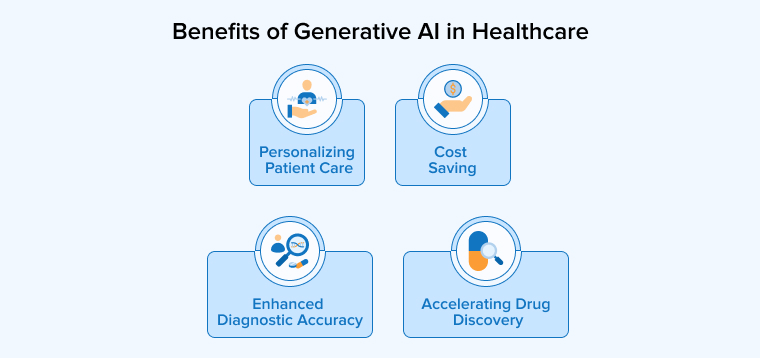
Generative AI introduces measurable improvements across multiple dimensions of healthcare delivery. The following are the primary benefits Gen AI delivers.
Cost Saving
Healthcare organizations allocate substantial resources to administrative tasks, data processing, and manual documentation. Gen AI automates a significant portion of these activities, reducing manual labor and operational costs. AI models process claims, generate summaries, and handle routine communications, allowing healthcare professionals to focus on direct patient care.
Healthcare payers also benefit from cost reductions as Gen AI improves claims processing accuracy and reduces misrouted submissions. By automating repetitive workflows, organizations streamline operations and redirect savings toward improving the quality of care and patient experiences.
Personalizing Patient Care
Generative AI enables providers to move beyond a one-size-fits-all treatment approach. By analyzing patient data, genetic profiles, and historical health records, these systems generate personalized treatment recommendations tailored to individual patients. This approach improves health outcomes by aligning treatments with each person’s unique medical profile.
Generative AI also enhances proactive outreach. Intelligent tools identify patients at risk of chronic conditions and recommend preventive measures, thereby improving long-term health and reducing the burden on health care facilities.
Enhanced Diagnostic Accuracy
Accurate diagnostics are central to effective patient care. Gen AI systems trained on extensive medical imaging datasets detect anomalies in X-rays, MRIs, and CT scans with a level of pattern recognition that complements clinicians’ expertise. This technology enables earlier detection of conditions such as cancer, cardiovascular issues, and neurological disorders.
Generative AI reduces the likelihood of misdiagnosis and boosts clinicians’ confidence in making well-informed decisions by providing them with accurate diagnostic results. The combination of human expertise and AI-assisted analysis strengthens the quality of patient care across healthcare settings.
Accelerating Drug Discovery
Traditional drug discovery is a resource-intensive process that can take over a decade and cost billions. Generative AI accelerates this timeline by simulating molecular interactions, predicting drug properties, and identifying promising compounds early in the research phase. AI models evaluate vast chemical libraries and generate unique molecular structures that traditional methods might overlook.
This capability in drug development reduces both the time and cost associated with bringing new treatments to market. Generative AI technology also supports clinical trials by optimizing patient recruitment and predicting therapeutic outcomes, enabling more efficient research processes in the healthcare sector.
Top 7 Generative AI Use Cases in Healthcare
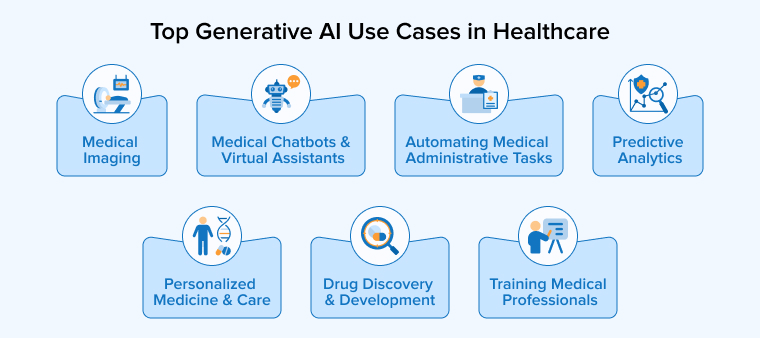
The real-world applications of Gen AI in healthcare span clinical, operational, and educational domains. The following use cases illustrate how Gen AI is delivering measurable outcomes across the healthcare sector.
Automating Medical Administrative Tasks
Administrative burden is a leading contributor to clinician burnout. Gen AI addresses this by automating documentation, generating discharge summaries, coding medical records, and drafting prior authorization requests. These tools process clinical notes and convert them into structured formats compatible with existing record systems.
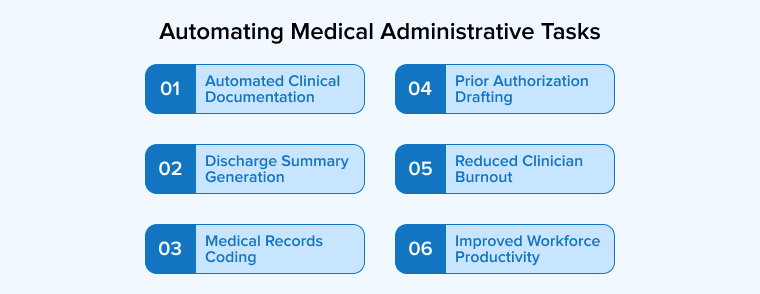
By reducing the time clinicians spend on documentation, Gen AI allows them to dedicate more attention to direct care. This shift not only improves satisfaction but also addresses clinician burnout by removing repetitive tasks from their daily workflows. Organizations that deploy Generative AI for administrative purposes consistently report improvements in streamlining operations and enhancing workforce productivity.
Medical Imaging
Medical imaging is one of the most impactful use cases of Gen AI in the healthcare domain. Gen AI generates synthetic data that augments datasets for diagnostic algorithms. These synthetic images help improve the accuracy of imaging analysis without requiring additional patient information, which supports privacy and compliance requirements.

Generative AI also enhances existing medical imaging by improving resolution, reducing noise, and highlighting areas of concern. Radiologists and pathologists benefit from AI-assisted analysis that identifies subtle anomalies across imaging modalities. Synthetic data in this context supports faster, more accurate diagnoses and contributes to better patient outcomes.
Drug Discovery and Development
Generative AI is transforming drug discovery by enabling researchers to model and simulate molecular compounds at scale. These systems predict how potential drugs will interact with biological targets, estimate efficacy, and identify side effects before laboratory testing begins. This approach to drug development reduces failure rates and shortens the path from concept to market.
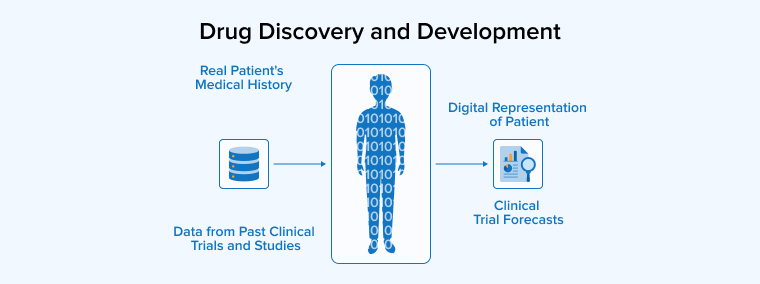
Life sciences organizations and pharmaceutical companies use Gen AI to explore chemical spaces that remained inaccessible through traditional methods. The technology generates novel compound structures, optimizes existing formulations, and accelerates the identification of viable treatment candidates. This represents a significant advancement in medicine and drug discovery research. As per a recent report, the global Generative AI in drug discovery market size is calculated at US$ 250 in 2024, grew to US$ 318.55 million in 2025, and is projected to reach around US$ 2847.43 million by 2034.
Personalized Medicine & Care
Personalized medicine represents a fundamental shift in how health care is delivered. Generative AI analyzes an individual’s genetic information, treatment history, and lifestyle factors to generate customized treatment plans. These recommendations ensure that interventions are aligned with each person’s unique health profile, improving treatment efficacy and reducing adverse reactions.
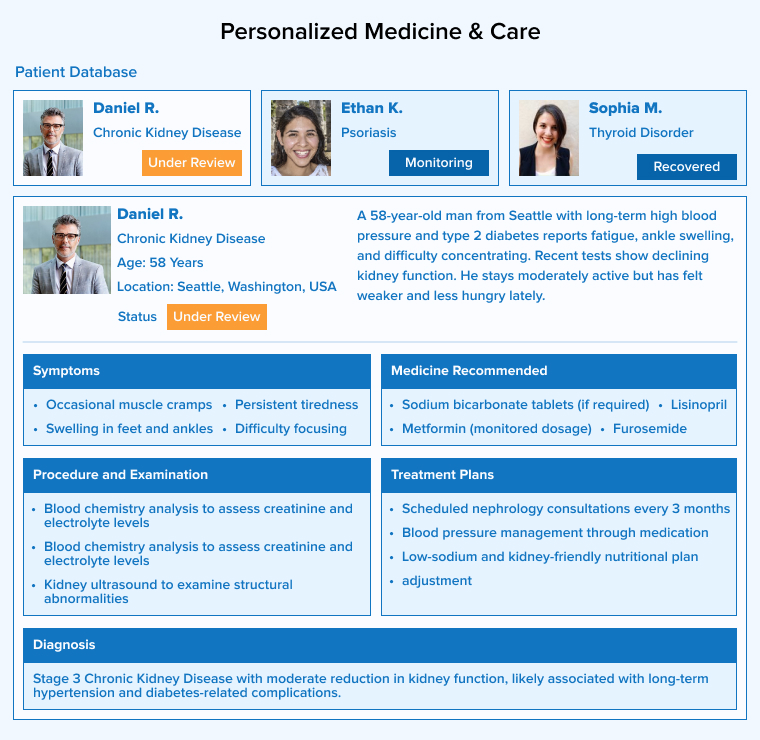
This approach is particularly effective for managing chronic conditions where treatment plans must evolve. By continuously analyzing patient data and health outcomes, Generative AI adjusts recommendations to reflect changing conditions. The result is a more responsive, patient-centered model of medicine and care delivery.
Medical Chatbots and Virtual Assistants
Generative AI virtual assistants and chatbots in healthcare are improving how patients interact with healthcare services. These tools understand queries, provide medical information, schedule appointments, and offer preliminary symptom assessments. They improve access to care, particularly for patients in remote or rural areas or those with limited mobility.
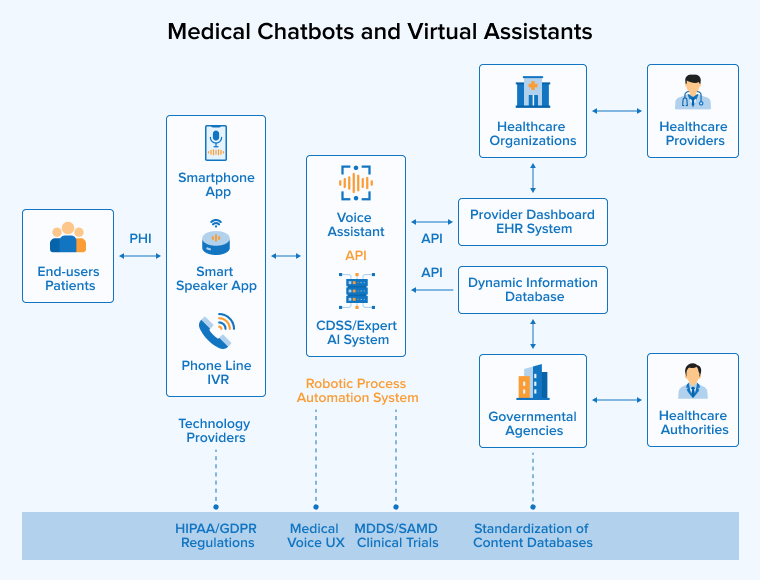
For healthcare providers, AI-powered chatbots reduce call center volumes, improve first-contact resolution rates, and handle routine inquiries without human intervention. These assistants also support mental health by offering initial screening and connecting individuals with appropriate professionals. Gen AI enables these tools to deliver consistent, accurate responses at scale, enriching patient experiences across all touchpoints.
Predictive Analytics
Predictive analytics powered by Generative AI enables organizations to anticipate patient needs, optimize resource allocation, and prevent adverse events. These clinical decision support capabilities allow AI models to analyze historical records, real-time vitals, and environmental factors to predict disease onset, hospital readmissions, and treatment responses.
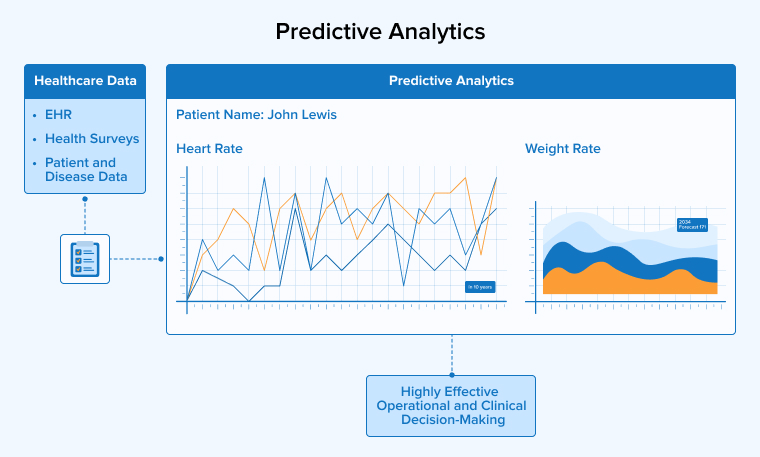
Effective healthcare data analytics supports population health management by identifying at-risk groups and enabling targeted interventions. Predictive tools also assist health insurance providers in assessing risk profiles and designing coverage plans. By leveraging Gen AI for predictive purposes, the healthcare sector can shift from reactive treatment to proactive prevention, significantly improving health outcomes.
Training Medical Professionals
Generative AI creates realistic training scenarios through simulated patient interactions, synthetic medical images, and virtual clinical environments. These modules allow medical students and practitioners to practice diagnostic and treatment procedures in a risk-free setting.
Synthetic data generated by these systems provides diverse clinical scenarios without compromising privacy. This approach addresses limitations in traditional training methods, such as limited access to rare conditions or specific imaging datasets. Gen AI technology enhances the quality and accessibility of medical education and medical research, preparing healthcare professionals to deliver more effective care.
Steps to Implement Generative AI in Healthcare
Implementing AI in healthcare requires a structured approach that balances innovation with regulatory compliance and clinical safety. The following steps outline a practical framework for healthcare organizations looking to deploy Generative AI effectively.
- Assess Organizational Readiness: Evaluate existing infrastructure, data quality, and workforce capabilities. Identify specific areas in healthcare where Gen AI can deliver measurable improvements or make operations more efficient.
- Define Use Cases and Priorities: Focus on high-impact, lower-risk applications first, such as automating administrative tasks or improving healthcare data management. Establish clear success metrics for each initiative.
- Ensure Data Quality and Governance: Gen AI requires high-quality, structured data to produce reliable outputs. Invest in data management systems that ensure accuracy, completeness, and compliance with regulations like HIPAA. Robust HIPAA compliance in healthcare software is essential for protecting sensitive records throughout the AI lifecycle.
- Select Appropriate AI Models: Choose AI models that align with your specific use case. Consider factors such as transparency, explainability, and the availability of domain-specific resources. Evaluate whether existing tools, custom-built solutions, or hybrid approaches best serve the organization’s needs.
- Pilot and Validate: Deploy Gen AI in controlled environments before scaling. Validate outputs against clinical standards, gather feedback from clinicians, and refine the systems based on real-world performance.
- Scale with Governance: Expand successful pilots across departments with proper governance frameworks. Establish monitoring systems to track performance, ensure ethical use, and maintain accountability across all Gen AI deployments.
- Invest in Workforce Training: Equip staff with the knowledge to work alongside AI tools effectively. Training programs should cover capabilities, limitations, and best practices for integrating technology into clinical workflows. Organizations that invest in AI software development services can build scalable solutions according to their specific operational needs.
Key Challenges of Adopting Generative AI in Healthcare
Despite the significant potential of Generative AI in healthcare, several challenges must be addressed to ensure safe, effective, and responsible adoption.
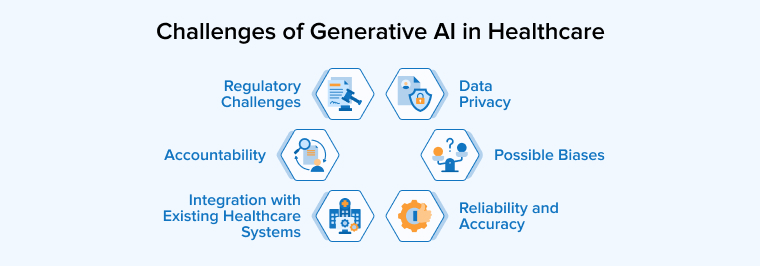
Data Privacy
Healthcare information is among the most sensitive categories of personal records. Generative AI requires access to large volumes of patient data for effective operation, introducing significant data privacy concerns. Organizations must ensure compliance with regulations such as HIPAA and GDPR while implementing robust safety measures to protect information from unauthorized access or breaches.
The use of synthetic data offers a partial solution, allowing systems to operate on representative datasets without exposing actual patient information. However, organizations must see to it that generated datasets do not inadvertently reveal identifiable patterns from the original records.
Reliability and Accuracy
Generative AI can produce outputs that appear authoritative but contain inaccuracies, commonly referred to as hallucinations. In healthcare, inaccurate outputs can lead to misdiagnosis, incorrect treatment recommendations, or flawed medical research conclusions. Ensuring reliability in clinical settings requires rigorous validation, continuous monitoring, and human oversight.
Healthcare organizations must implement quality assurance processes that verify generated content against established medical standards. Clinicians should treat AI outputs as support tools rather than definitive answers, maintaining their role as the final authority in healthcare decisions.
Possible Biases
The performance of Generative AI is directly tied to the quality and diversity of the information it learns from. If underlying datasets contain biases related to demographics, socio-economic factors, or geographic representation, the resulting AI models will replicate and potentially amplify those biases. In the healthcare industry, this can result in unequal treatment recommendations and disparities in diagnostic precision across patient populations.
Addressing bias requires diverse, representative datasets and ongoing auditing of outputs. Organizations should establish protocols to evaluate the fairness of generated recommendations and ensure equitable health outcomes for all patients.
Integration with Existing Healthcare Systems
Most organizations in the healthcare sector operate on legacy systems that were not designed to accommodate advanced technology. Integrating Generative AI with existing record systems, clinical workflows, and operational platforms presents significant technical challenges. Interoperability issues, data silos, and incompatible formats can slow adoption and limit effectiveness.
Successful integration requires a phased approach, starting with well-defined interfaces between Gen AI systems and existing infrastructure. Organizations should prioritize solutions that complement current workflows rather than revamping the complete system.
Regulatory Challenges
The regulatory landscape for Generative AI in healthcare continues to evolve. Different jurisdictions apply varying standards to how these systems can be used in clinical environments, creating complexity for organizations operating across multiple regions. Certifications, algorithm transparency requirements, and liability frameworks are still being defined by regulatory bodies.
Organizations must stay informed about current and emerging regulations while building compliance into their development processes. Proactive engagement with regulators and industry bodies can help develop practical and safety-focused guidelines for adopting Gen AI in the health care sector.
Accountability
When Generative AI contributes to a clinical decision, determining accountability for adverse outcomes becomes complex. If a recommendation leads to patient harm, it raises questions about who is responsible, whether it’s the technology provider, the organization, or the clinician who acted on the recommendation.
Establishing clear accountability frameworks is essential for responsible deployment. Organizations should define roles, document AI-assisted decision processes, and ensure that human oversight remains a core component of every clinical workflow involving Gen AI. The lessons learned from early implementations will guide governance approaches as the technology scales across the healthcare industry.
Final Thoughts
Generative AI in healthcare represents a substantial opportunity to improve health outcomes, streamline operations, and enhance the quality of healthcare services. The applications are diverse with measurable results. However, realizing its full potential requires a structured approach. Challenges such as data privacy, reliability, integration, and regulations need careful consideration and handling. The road ahead demands a balance between innovation and responsibility, ensuring that Generative AI technology serves as a tool for better health care delivery rather than a replacement for human expertise and judgment. Organizations that take a structured, governance-driven approach will be best positioned to generate additional insights and improve outcomes across the healthcare sector.
FAQs
The primary purpose of Generative AI in healthcare is to augment the capabilities of healthcare professionals by automating routine tasks, enhancing diagnostics, and generating actionable additional insights from complex healthcare information.
The future of Generative AI points toward deeper integration across clinical, operational, and research functions. Key growth areas include AI-assisted diagnostics, automated trial management, and real-time personalized treatment. Generative AI in healthcare will also play a role in addressing workforce challenges by reducing clinician burnout and improving healthcare services in underserved regions.
Generative AI cannot replace doctors. It enhances the capabilities of practitioners through advanced analytical support. It can process information faster, identify patterns across large datasets, and automate administrative tasks, but it lacks the clinical judgment, empathy, and contextual understanding that human physicians bring to patient care.

Garvit Shukla is a healthcare technology consultant at TatvaSoft. He collaborates with a team of developers to meet client requirements for healthcare software solutions. With a decade of experience in software development, he contributes to TatvaSoft's ability to deliver robust outcomes.



Comments
Leave a message...